Two Left Feet, One Spare Hanky: How a Morris Set Absorbs an Absence

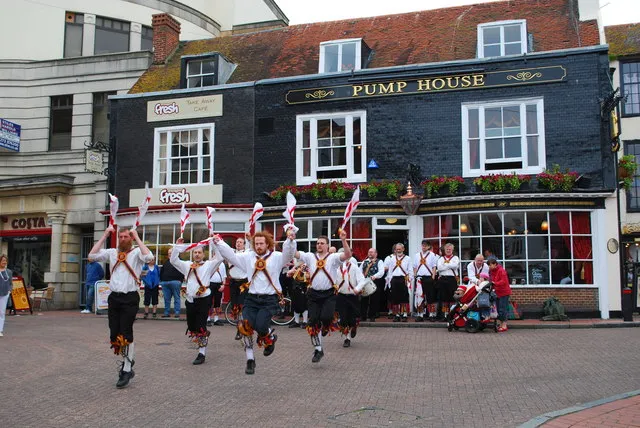
Photo: morris dancers rehearsing in community hall england, via www.thewrap.com
Morris dancing looks, from the outside, like a triumph of togetherness. Six dancers, maybe eight, moving as one. Bells in time. Sticks meeting with a crack. Hankies flicked in unison. What the audience rarely sees is the rehearsal before the rehearsal: the conversation about who is away, who is carrying a knock, and who can step into a gap at short notice without turning the whole set into a comedy of errors.
At St Albans Morris Men, absence is not an emergency. It is a planning assumption. Illness, work trips, family commitments, a car that won’t start on a Saturday morning — these are ordinary facts of life for a side that has been dancing in Hertfordshire since 1972. The trick is not pretending they won’t happen. The trick is building a set that can bend without breaking.
The dancer who isn’t there is still part of the plan
Ask anyone who has organised a village fete or a charity walk and they will recognise the problem. You have a programme, a roster, and a hopeful assumption that everyone will turn up. Then someone’s child is unwell, or a train is cancelled, or a shoulder is playing up. The difference with a Morris side is that the performance itself is a visible, synchronised thing. A missing dancer is not just a gap in the line; it is a change to the shapes, the calls and the music.
The side’s approach starts long before the day. Dancers are encouraged to learn more than one position in a set. That does not mean everyone is expected to be flawless in every role. It means that when someone is missing, there is usually a second pair of feet that has at least walked the figures, knows where to stand, and can be talked through the rest. Call it shadowing, call it cross-training, call it common sense with bells on.
Position-swapping is a skill, not a scramble
In a morris set, the geometry matters. A dancer who usually stands at one end may need to move into the middle. Someone used to leading a figure may need to follow. The calls — the short verbal prompts that keep a set together — have to be adjusted, sometimes mid-dance. A side that has never practised this will look like it is improvising badly. A side that has practised it can make a missing dancer almost invisible to the crowd.
The preparation is unglamorous. It happens on a Tuesday evening in a church hall, not on a sunlit cathedral green. Dancers walk through figures slowly, swap places, and get used to the view from a different spot in the set. The aim is not to create a team of identical robots. It is to create enough shared understanding that a gap can be covered without a committee meeting in the middle of the dance.
There is also a practical etiquette to it. If a dancer is carrying an injury, they may still turn up, still play a part, and still step out of the physically demanding sections. That is not a failure. It is the same principle that keeps amateur sports clubs and choirs going: participation can be flexible without the whole thing falling apart.
What happens when the set is one short
Sometimes, despite the planning, the side is genuinely a dancer down. This is where the calls and figures earn their keep. Morris traditions vary, but many figures can be adapted — a set can be danced with a gap, a dancer can double a part, or a simpler version can be called. The music may need to slow slightly, or a phrase may be repeated to give someone time to get back into position. None of this is ideal, but it is far better than cancelling a stand that a village fete or a care home has been looking forward to for weeks.
The decision is usually made by the foreman or squire in consultation with the musicians and the dancers who are present. It is not a dramatic vote. It is a quick, practical conversation: who knows this figure, who is comfortable moving, and what is the safest and clearest version we can dance today? The audience, meanwhile, is usually none the wiser. They see a side dancing. They do not see the quiet algebra behind it.
The lesson for other community groups
The Morris approach to absence is not unique, but it is unusually explicit. Many voluntary groups rely on the same handful of people to do everything, and then panic when one of them is unavailable. A morris side cannot afford that. The dance requires a minimum number of bodies, and the calendar requires a minimum number of stands. So the side builds redundancy into its people, not just its paperwork.
That might mean a rota that names a reserve, a rehearsal that deliberately swaps roles, or a simple habit of asking, ‘Who else could do this if you couldn’t?’ It is not about replacing anyone’s expertise. It is about recognising that community life is fragile when it depends on perfect attendance.
In 2026, with diaries fuller than ever and voluntary time under pressure, that lesson feels especially relevant. St Albans Morris Men will keep dancing on cathedral green, outside pubs, and at the less glamorous venues that make up a side’s real calendar. Some of those dances will feature the usual lineup. Some will feature a dancer who learned a new position last month because someone else had a wedding to go to. Both are Morris. Both keep the bells ringing.
The understudy hanky may not be the most romantic image in folk dance. But it is one of the most useful. A side that plans for absence is a side that keeps its promises — and that is a tradition worth borrowing, whatever you do on a Saturday morning.