The Ledger Behind the Bells: What It Actually Costs to Keep a Morris Side Dancing

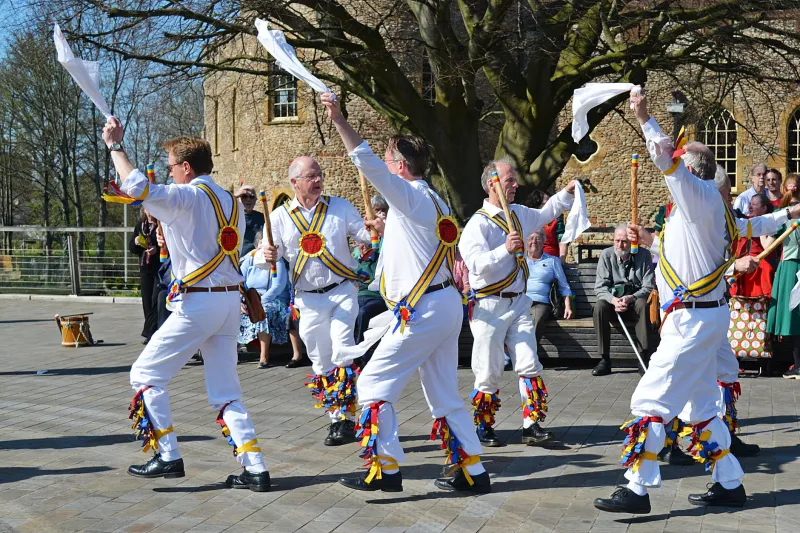
There is a particular kind of magic to a Morris side turning up in a town centre, forming a set and getting on with it. Bells jingle, sticks clash, someone calls a figure, and for a few minutes the world feels pleasantly old-fashioned. What the audience does not see is the quiet admin that made the moment possible: the insurance renewal, the hall booking, the replaced bell, the tank of fuel, the subs reminder and the treasurer's spreadsheet with one too many tabs open.
None of that is a complaint. It is just the honest background to a tradition that looks effortless because people have put the work in. So, with 2026 now well under way, here is a transparent look at the real cost of keeping a Morris side dancing — and at how St Albans Morris Men try to balance the books without turning a folk dance into a finance seminar.
The bits nobody claps for
Start with the unglamorous essentials. A side needs somewhere to practise, and halls in and around St Albans are not free. A weekly or fortnightly booking through the autumn and winter adds up quickly, even when the room is modest and the tea urn is doing most of the decorating. Then there is public liability insurance, which is not exciting to buy and not optional if you are dancing in public, hiring premises or taking part in community events. It is the sort of cost you only notice when it is missing.
There are also the small recurring charges that never make the photographs: website hosting, domain renewal, perhaps a card reader or online banking fees, printing for posters, and the odd replacement of a first-aid kit or a set of batteries for a melodeon. Individually they are tiny. Together they are the background hum of running any small community group.
Kit is not a one-off purchase
Morris kit looks timeless, but it is not maintenance-free. Bells get lost, straps wear through, baldricks need repairing, sticks split, hankies fray, shoes wear down and shirts need replacing when they have seen one too many summer fetes. Even a side that looks after its kit carefully will spend money each year on repairs and replacements.
There is also the question of storage and transport. Someone has to keep the flags, sticks, spare bells and noticeboards somewhere sensible, and someone has to get them to the dance. That may mean a rota of cars, a trailer for bigger events, or simply a lot of careful loading and unloading. It is not glamorous, but it is part of the cost of being visible.
Fuel, fees and the out-of-county dance
A Morris side is mobile by nature. St Albans Morris Men dance locally, but they also travel to events elsewhere in Hertfordshire and beyond. Fuel is an obvious cost, but it is not the only one. There are parking charges, the occasional train fare, and the small matter of time — which is freely given but not infinite. When a side is invited to a fete, wedding or festival, a hire fee may help cover those costs. When it dances in a town centre or at a community event, a collection bucket may do the same job in a more informal way.
The important point is that neither the fee nor the collection is a windfall. They are part of the same balancing act. A side that charges nothing cannot keep replacing sticks forever. A side that charges too much prices itself out of the community events that keep it connected to local people. The sweet spot is somewhere in the middle, and it takes judgement rather than a calculator alone.
Where the money comes from
For a side like St Albans Morris Men, income tends to arrive from a few familiar directions. Member subscriptions provide a steady base and remind everyone that belonging has a small practical cost as well as a social one. Hire fees for private bookings and paid events help with the bigger bills. Collections at public dances turn appreciation into something usable, even if the total is modest. Occasionally there may be a raffle, a social event or a small grant, but these are extras rather than the foundation.
The balance is not always elegant. A wet summer can reduce outdoor collections. A busy year of repairs can eat into reserves. A generous booking can make the difference between a comfortable year and a tight one. This is why treasurers of folk groups tend to develop a very particular expression when someone says, cheerfully, that it must be lovely to do something so simple.
Why the bucket still matters
It is easy to assume that a collection is a nice extra rather than a necessity. In reality, a few coins in a bucket help pay for the things that make the next dance possible: a new bell, a hall deposit, a tank of fuel, a replacement stick. The same is true of a hire fee. When someone books a Morris side for a wedding or a village fete, they are not just paying for a performance. They are helping to sustain a living tradition that has been part of Hertfordshire life for decades.
St Albans Morris Men have been dancing since 1972, and that longevity is not an accident. It comes from people turning up, practising, mending, driving, booking, counting and occasionally standing in the rain with a bucket. The bells are the visible part. The ledger is the quiet part underneath.
The honest summary
A free afternoon of folk dance is not really free. It is subsidised by subscriptions, supported by bookings and collections, and kept going by people who are willing to do the unshowy work. That does not make the dancing any less joyful. If anything, it makes it more impressive. Behind every set of bells in 2026 is a small, practical act of community maintenance — and that is worth a clap, a coin and perhaps a slightly better understanding of what it takes to keep the tradition on the road.