Pipe Smoke, Bean Fields and Borrowed Titles: What Morris Dance Names Really Tell Us
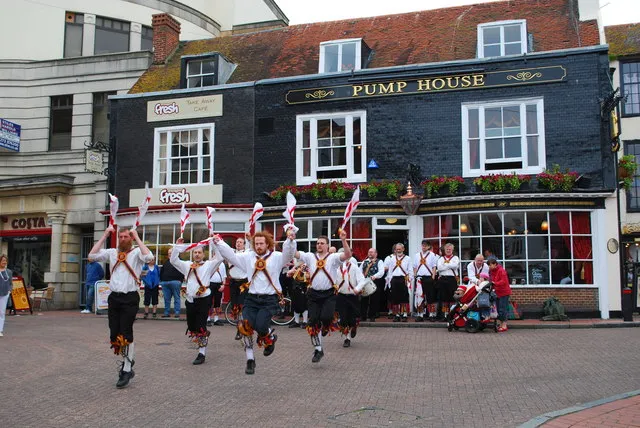
Morris dance names are a bit like nicknames in a village: useful, stubborn and often impossible to explain without a story attached. Ask a dancer why a tune is called Bacca Pipes or Bean Setting and you may get a shrug, a grin, or a ten-minute detour into nineteenth-century farm work. The name is not the dance, of course. But it is rarely random either. Across the repertoire, titles work as labels, reminders and small pieces of social history — and for a side such as St Albans Morris Men, they are part of the material we curate every time we decide what to dance.
Names That Worked Before Notation Did
Most traditional dance tunes and figures were not passed on through tidy printed scores. They travelled by ear, by foot and by memory. A name had to do a job: distinguish one set from another, jog the memory of a musician, or tell a dancer which village version was meant. Short, punchy titles did that better than long descriptions. Bacca Pipes, for instance, is usually linked to the old habit of smoking a pipe — 'bacca' being a dialect shortening of tobacco — and the dance itself has often been associated with pipe-smoking gestures or a comic business with clay pipes. Whether every side performed it with a real pipe is another matter. The name survives because it was memorable, not because it was a strict instruction manual.
That is a useful thing to remember when browsing a morris tune list for the first time. These are not catalogue numbers. They are handles. A name like Bean Setting points towards agricultural work and the old custom of setting beans, while the dance may also carry a tune that has drifted between villages. The title and the steps do not always match neatly, and they do not need to. The name is a door into the tradition, not the whole room.
Places, People and a Sense of Belonging
A good number of morris dance names are place names or surnames. That makes sense when you consider how the tradition was spread. A tune might be known as the version from a particular village, or attached to a family who danced it, or named after a pub where it was played. In a county like Hertfordshire, where communities sit close together but each has its own character, those labels helped dancers say: this is our way of doing it, not the way they do it down the road.
Surnames can be even more revealing. A dance named after a person may honour a musician, a squire, a landlord or a dancer remembered for a particular step. Sometimes the person is lost to history and only the name remains, like a signature on the back of an old photograph. St Albans Morris Men have long drawn on a broad repertoire rather than a single village inheritance, so we meet these names as guests. We may know the tune, the figures and the accepted style, but the name still points back to a place or a family we did not invent. That is part of the pleasure — and part of the responsibility.
Objects, Habits and a Bit of Comedy
Then there are the names that seem to come straight out of daily life: pipes, sticks, handkerchiefs, bottles, boots, sheep, beans, broom handles. Morris has always been a practical business, and its titles often reflect the tools and habits of the people who danced. A title may refer to a prop, a gesture, a trade or a local joke. Some are gently comic; others are plain descriptive. What they share is an assumption that the audience and the dancers know what the words mean.
That can be a small hurdle for newcomers in 2026. A first-time spectator at a St Albans event may hear a caller announce a dance and wonder whether Bacca Pipes is about plumbing or Bean Setting is a cookery demonstration. In practice, the best answer is usually to watch the dance and then ask. Dancers are generally happy to explain, and the explanation often says as much about the side as the dance itself. One person's 'traditional version' is another person's 'the way we learned it from a workshop in the 1990s'.
Versions, Families and the Question of Ownership
Morris dances often exist in families of versions. The same name may turn up in different counties with different figures, a different tune, or a different metre. This is not a sign that someone got it wrong. It is a sign of a living tradition that was copied, adapted and remembered imperfectly — which is how most oral traditions work. A side may choose one version because it suits the musicians, another because it sits well with the dancers, and another because it was learned from a particular teacher and kept as a mark of respect.
For St Albans Morris Men, the choice is usually practical and social rather than archaeological. We are not a museum case, and we are not trying to freeze a single moment in 1890s amber. We want names that audiences can follow, tunes that carry across a town square, and figures that work with the number of dancers who turn up on a Saturday. Some dances are kept because they are crowd-pleasers; some because they are good teaching pieces; some because a long-serving member has a soft spot for them. The name may be old, but the reason for dancing it is often contemporary.
What We Keep Alive
Keeping a name alive is not the same as keeping it unchanged. A side can preserve the title, the tune and the general shape of a dance while adapting the detail to its own style, its own musicians and its own audiences. That is how traditions survive without turning into re-enactment. It also means that when St Albans Morris Men dance a old tune in a Hertfordshire pub garden or on a station forecourt, we are taking part in a long conversation about what belongs where, what gets remembered and what gets gently revised.
The names are part of that conversation. They are funny, odd, sometimes frustratingly vague, and occasionally very beautiful. They remind us that morris was never just a set of steps. It was a way of marking place, celebrating a person, poking fun at a habit or simply making sure the next dancer knew which tune to expect. So next time you hear a caller announce Bacca Pipes or Bean Setting, listen to the name as well as the music. It is a small label with a long tail — and it is one of the ways a side like ours keeps the past in the present tense.