Meet the People Who Keep the Bells Ringing: A Guide to Morris Side Roles
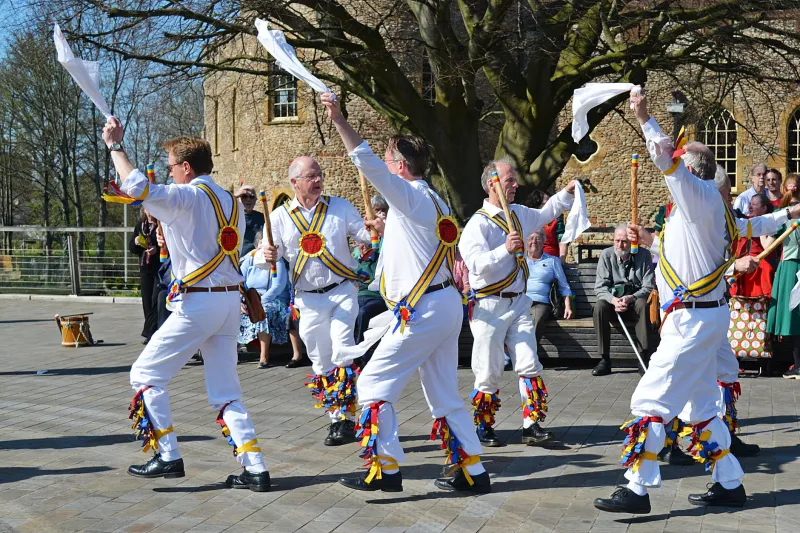
If you have watched St Albans Morris Men at a fete, on Cathedral Green or outside a pub on a Saturday morning, you might have assumed that one person is in charge. Perhaps the one calling the dances, or the one with the clipboard, or the one wearing the most alarming hat. The truth is a little more communal — and a lot more practical.
Morris sides have traditional roles, but they are not a strict corporate hierarchy. Think less boardroom, more well-organised village hall. St Albans Morris Men have been dancing in Hertfordshire since 1972, and like most sides we rely on a handful of people doing specific jobs so that everyone else can get on with the bells, sticks and hankies.
Here is who does what.
The Squire: Not a Dictator, More a Head of Ceremonies
The squire is the public face of the side. They chair meetings, represent the side to venues and organisations, welcome newcomers and often act as the person who speaks when a few words are needed. If something has to be announced at a fete, the squire is usually the one with the clipboard and a slightly apologetic expression.
In some sides the squire also calls dances during a performance, signalling changes and keeping the programme flowing. It is a role that requires a decent memory, a clear voice and the ability to sound confident even when the next dance has just gone slightly sideways. The squire is not there to boss everyone about. They are there to keep the side pointed in the same direction.
The Bagman: The Side’s Answer to a Diary, a Bank and a Filing Cabinet
The bagman is the one who keeps the administrative wheels turning. Historically the role was linked to the side’s bag or collection, and today it still covers the practical side of things: bookings, correspondence, money, kit, and the endless small questions that come with being a working dance side.
If you want to hire St Albans Morris Men for a wedding, festival, fete or charity event, the bagman is often your first human contact. They will check the date, ask what you have in mind, confirm the details and make sure the right people turn up with the right equipment. It is not the most glamorous job on the side, but without a bagman, dates clash, invoices go missing and someone ends up dancing in the wrong car park.
The Foreman: The One Who Actually Teaches the Dances
The foreman is the side’s dance teacher and keeper of standards. They run practices, teach steps, remind everyone where they should be standing, and decide when a new dance is ready for public viewing. A good foreman has the patience of a saint and the ability to spot a wrong foot from across a hall.
For newcomers, the foreman is often the most important person in the room. They are the one who explains that the stick goes there, the hanky goes there, and no, you are not the only person who has ever turned the wrong way during a figure. The foreman keeps the repertoire alive and makes sure the side can still dance well after the pub has been visited.
The Musician: Tempo, Tunes and the Occasional Dirty Look
Morris dancing does not work without music. The musician — often a fiddle or melodeon player, sometimes both — sets the tempo, chooses the tunes and works closely with the foreman to match music to dance. A good musician can rescue a wobbly dance; a great one makes the whole thing feel effortless.
The musician also has the tricky job of watching the dancers while playing. This means they can see everything: the early turn, the late step, the person who has drifted slightly out of place. Their raised eyebrow is a traditional part of the Morris vocabulary.
The Fool: Licence to Be Silly
The fool is one of the oldest characters in the Morris tradition. They provide comic business, engage the audience and add a bit of chaos around the edges of a performance. The fool may not run the side, but they often run off with the audience’s attention.
It is worth saying that the fool is not usually a decision-making role. They are there to entertain, to play with the crowd and to remind everyone that Morris is a folk tradition with a sense of humour. If you see someone in a slightly odd costume doing something ridiculous while the dancers are trying to concentrate, that is probably the fool doing their job.
So Who Actually Decides?
In practice, most Morris sides make decisions collectively. There is usually a committee, regular meetings and an annual general meeting where the side agrees on the important stuff: bookings, money, kit, practice arrangements and who is taking on which role. The squire chairs, the bagman keeps the paperwork, and everyone else has a say.
For hirers, this means you do not need to learn a complicated hierarchy. Get in touch, explain what you need, and the side will work out who does what. For newcomers, it means you can turn up without knowing the difference between a squire and a bagman. You will learn soon enough, usually by being handed a stick and told to stand at the back.
St Albans Morris Men are a team, not a one-person show. The roles matter, but they are there to serve the dance. Next time you see the bells, look for the bagman with the diary, the foreman with the practice notes and the squire trying to find the person who was supposed to bring the spare sticks. It is a team sport with hats.