The Case Against 'Quaint': Morris Dancing Has Never Stood Still
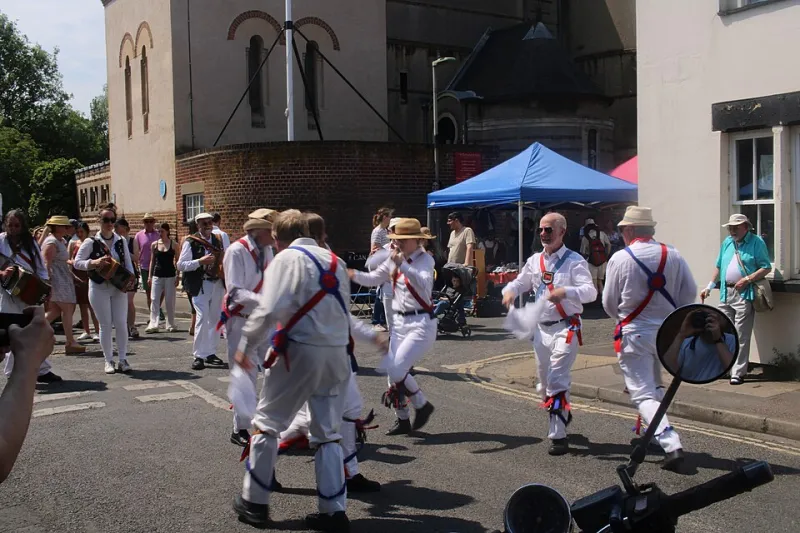
Photo: Pierre Marshall, CC BY 4.0, via Wikimedia Commons
There's a word that attaches itself to Morris dancing like a burr to a wool sock, and the word is "quaint". It turns up in local paper captions, in slightly apologetic introductions at summer fetes, and in the sentence "isn't it lovely that they still do that". Nobody means any harm by it. But it's a way of putting Morris in the past tense — as though the bells and the sticks were an exhibit in a glass case, brought out once a year for the tourists and put back before anything gets chipped.
We'd like to push back on that, politely but firmly.
Quaint is a word that closes doors
Think about what "quaint" actually does in a sentence. It signals that the thing being described is charming because it's obsolete. A quaint cottage. A quaint custom. A quaint little shop selling doilies. The word carries an implicit full stop: this is a curiosity, it belongs to another era, and you may admire it from a safe distance without any obligation to engage.
Morris doesn't need admirers at a safe distance. It needs people in the street, a pub with the doors open, and a spare hour on a Saturday morning.
Fifty-four years is not a museum label
St Albans Morris Men have been dancing in and around Hertfordshire since 1972. That's over half a century, which sounds like a long time until you remember what it actually represents: a continuous run of ordinary evenings in hired halls, of walking out to the Abbey Gateway or the market on a Saturday, of standing in the cold at a Boxing Day gathering because that's what the side does.
Any tradition that survives fifty-four years does so because people kept choosing it. Not because a curator preserved it — because a bloke agreed to learn the steps, bought a pair of proper shoes, and turned up again the following week. Sides live or die on that decision, repeated a few dozen times a year, by people with jobs and families and better things to do on a Tuesday.
That's not heritage management. That's a hobby with momentum.
The tradition has always been a moving target
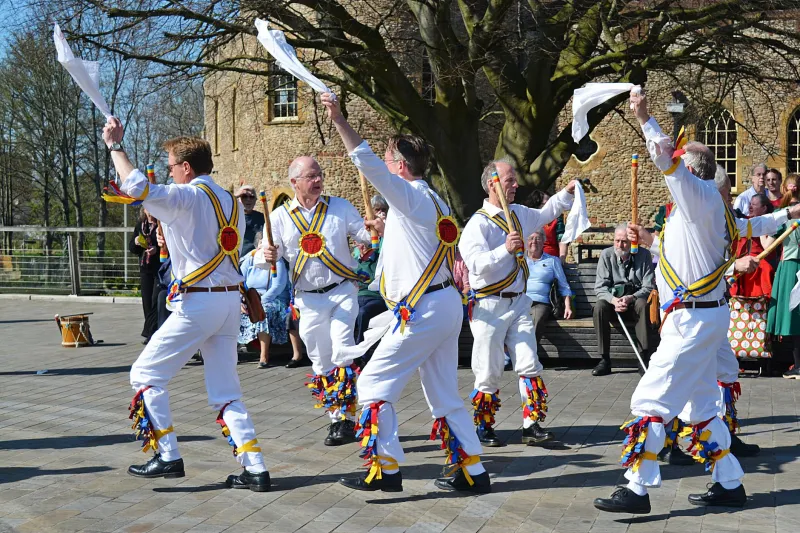
Here's the bit that tends to surprise people: Morris has never been a fixed thing. What we think of as the classic Cotswold repertoire was collected and written down in the early twentieth century, at a moment when the dances were already changing, and the collectors made choices about what to record and what to leave out. Even then, the tradition was being edited in real time.
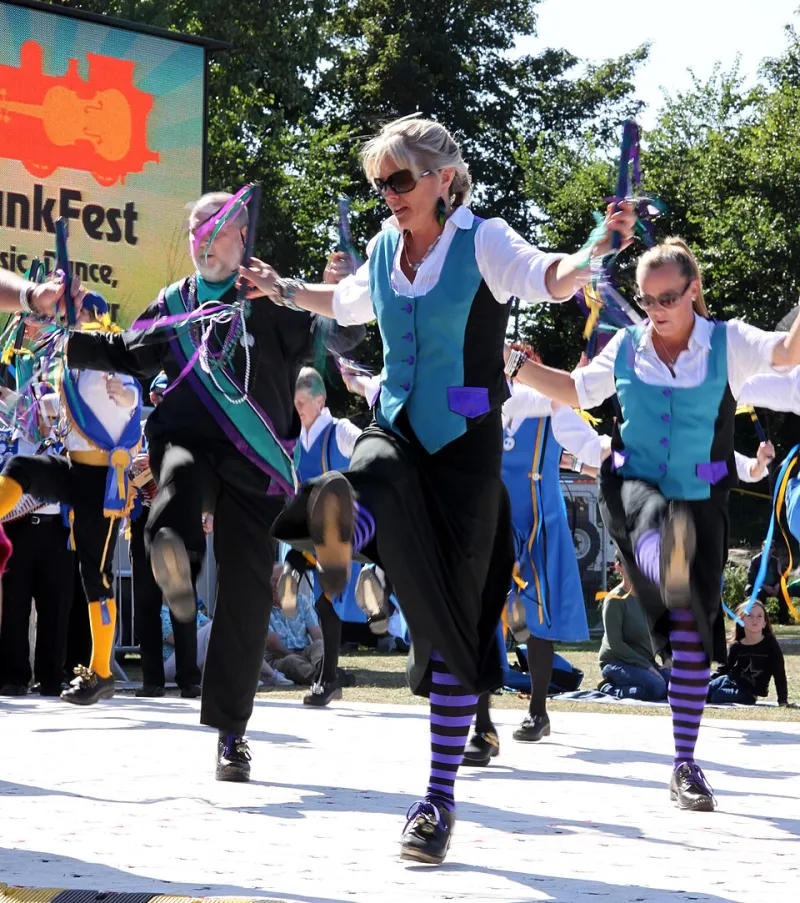
Since that point, the form has kept shifting. Tunes get reworked. Sides write new dances, or borrow them and bend them. Different traditions — Border, Molly, North West — have been revived, adapted and mixed. Women's and mixed sides have grown the whole scene enormously. Instruments come and go. Somebody turns up with a melodeon and suddenly the arrangements sound different.
St Albans Morris Men sit inside that wider picture rather than apart from it. We dance the dances, we keep the customs, and we also make our own decisions about kit, repertoire and where we go. That's what a living tradition does: it holds on to the shape of a thing while letting the details breathe.
New audiences, not nostalgic ones
There's a lazy assumption that the people watching Morris are all of a certain age and remembering a village they never actually lived in. In our experience, the crowd at a stand is much more mixed than that. Families stopping on the way back from the market. A group of students who've never seen it before and are filming it. Someone's grandparents. Someone's toddler, absolutely mesmerised by the bells.
And the people doing it aren't a heritage re-enactment society either. Sides around the country are full of teachers, engineers, nurses, retirees, teenagers and people who joined on a whim after watching a dance outside a pub. The national scene keeps producing new musicians, new dancers and new events. That's not nostalgia. That's recruitment.
A living tradition asks something of you
If Morris were a museum piece, the correct response would be to look at it, nod approvingly, and move on to the gift shop. Because it's a living tradition, the correct response is a bit more demanding:
- Turn up. A stand is better with a crowd. Bring the family, bring the dog, bring a camera.
- Ask questions. Dancers love being asked what a particular dance is called, or why the bells are where they are. It's the easiest conversation in the world to start.
- Consider learning it. Every side is short of dancers and short of musicians. Nobody arrives already able to do it; that's not how any of this works.
- Book us. Fetes, weddings, beer festivals, charity fundraisers, school grounds, pub gardens. A living tradition needs invitations, not just applause.
Judge it with your own eyes
So the next time somebody reaches for the word "quaint", feel free to gently suggest an alternative: busy, loud, ongoing, ours. St Albans Morris Men will be out in Hertfordshire again this year — the same side, the same sticks, the same bells, but not remotely the same as it was in 1972, and not remotely finished.
Come and watch a stand. Stay for a pint afterwards. That's not a heritage visit. That's a Saturday.