Book the Bells: A Practical Guide to Hiring a Morris Side for Weddings, Fetes and Festivals
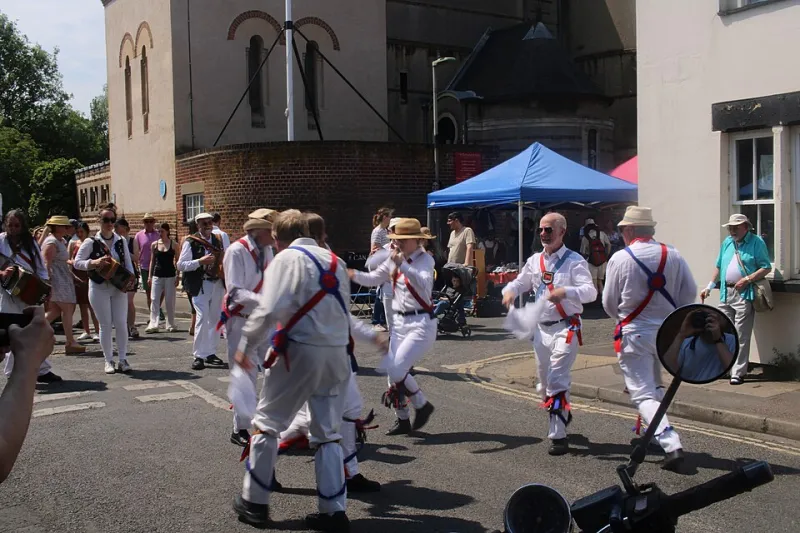
Photo: Pierre Marshall, CC BY 4.0, via Wikimedia Commons
Booking a Morris side can feel like a small leap into the unknown. You know what you want: a bit of traditional English dancing, a bit of noise, a bit of colour and something your guests will actually remember. What you may not know is how to make that happen without a hitch.
This guide is for event organisers, brides and grooms, village hall committees and festival bookers. It is written from the perspective of St Albans Morris Men, but most of it applies to any reputable side in the UK. The short version: ask early, be clear about what you want, and think about the ground.
First, decide what you want the dancing to do
Morris can play several roles at an event. It can be a formal welcome, a lively interlude, a procession, a background atmosphere or a full performance. Those are different jobs and they need different planning.
At a wedding, the side might dance for fifteen minutes while guests gather, or lead the couple from the ceremony to the reception. At a village fete, it might be two or three short spots across the afternoon. At a festival, it might be a set on a stage or a roving performance between acts. Decide which you want before you approach a side. It makes the conversation much easier.
The questions to ask before you book
Start with the practical basics. How many dancers and musicians will attend? How long is a typical set? How much space do they need? Do they travel, and how far? What do they charge, and does that include expenses? Are they insured, and can they provide a risk assessment?
Ask whether they have danced at a venue like yours before. A pub yard, a village green and a formal lawn are all different. Ask what they need in terms of access, parking and somewhere to change or leave instruments. Ask whether they are comfortable with children and dogs nearby, and whether they involve the audience.
It is also fine to ask for a short video or to see them dance locally first. A side that is used to public events will be happy to answer these questions. If they are vague about insurance or timing, that is worth noting.
Space: think square metres, not vibes
Morris looks spontaneous, but it needs room. As a rough guide, allow at least four metres by four metres for a six-person side plus a musician. More is better, especially if sticks are involved. If the side is dancing in a procession or moving between spots, think about the route as well as the performance area.
The surface should be flat and firm. Grass is fine if it is dry and not too spongy. Tarmac and paving are excellent. Gravel, loose chippings, steep slopes and decking are best avoided. Wet grass is not ideal — dancers need grip, and bells plus slippery ground is a poor combination.
Check for obstacles: low branches, bollards, planters, cables, uneven paving and anything that might trip a dancer or a guest. If the only flat space is in the middle of a thoroughfare, think about how you will keep people from walking through the set.
Timing: short sets, clear gaps, no surprises
A Morris side does not need a long slot. Fifteen to twenty minutes is often plenty for a wedding or a formal welcome. Fetes and festivals may want two or three short spots across the day, with breaks in between. Dancing for an hour without stopping is hard on the dancers and less enjoyable for the audience.
Avoid scheduling the dancing during speeches, the wedding breakfast or any moment when guests are expected to be seated and quiet. Morris is at its best when people can gather round, watch for a bit and drift away. If your event has a tight schedule, give the side a clear start time and a named person to check in with on the day.
Sound: bells, sticks and the great outdoors
Morris is acoustic. That is part of its charm. The bells, sticks and instruments carry well in the open air, but they are competing with traffic, chatter, wind and any amplified music you may have booked.
If you are using a PA for other parts of the event, do not put Morris through it unless the side asks. Bells and sticks do not need help. What they do need is a sensible position away from loudspeakers and generators. If the event is indoors, check that the ceiling is high enough for sticks and that the floor is suitable.
Weddings: a welcome, an interlude or a send-off
For weddings, the best Morris bookings are usually short and well placed. A side can greet guests as they arrive, dance while photographs are being taken, or form a informal guard of honour as the couple leaves. It can be a lovely bit of local colour without taking over the day.
Be clear about the dress code and the tone. Some couples want the full traditional kit; others want something more low-key. Ask about audience participation — it can be great fun, but not every couple wants Uncle Brian joining in during the first dance.
Fetes and festivals: plan for crowds and weather
Village fetes and festivals often have lots going on. Morris works best when it has a defined spot and a clear time, even if the audience is drifting. A roving performance can be brilliant, but it needs a route and someone to keep the crowd from blocking it.
Weather is the obvious wildcard. Have a backup plan for heavy rain. Dancers can cope with a bit of drizzle, but they cannot dance safely on a slippery surface or in high winds. If the event is outdoors, think about shade, water and somewhere to shelter between sets.
Money, insurance and the boring bits
Ask about fees upfront. Sides are not agencies and most are run by volunteers, but travel and time still cost money. Clarify whether the fee includes travel, whether a deposit is required and what happens if the event is cancelled.
Check public liability insurance and risk assessments. This matters more than most people think, especially for public events. A reputable side will have these documents and will be used to supplying them. If you are organising a school or charity event, ask about any safeguarding requirements in advance.
A simple checklist
- Date, start time and finish time
- Performance area size and surface
- Access, parking and changing space
- Number of dancers and musicians
- Set length and number of spots
- Wet-weather plan
- Sound and proximity to PA
- Insurance and risk assessment
- Fee, expenses and cancellation policy
- Named contact on the day
The short version
Book early, especially for summer weekends. Be clear about the job you want the dancing to do. Give the side flat, firm ground and a sensible slot. Keep it short, keep it friendly and let the bells do the rest. A well-planned Morris booking is not complicated — it is just a bit of traditional English dancing, done properly, with enough space to swing a stick.