The Bells Have Stopped — Now What? A First-Timer’s Guide to Watching Morris in St Albans
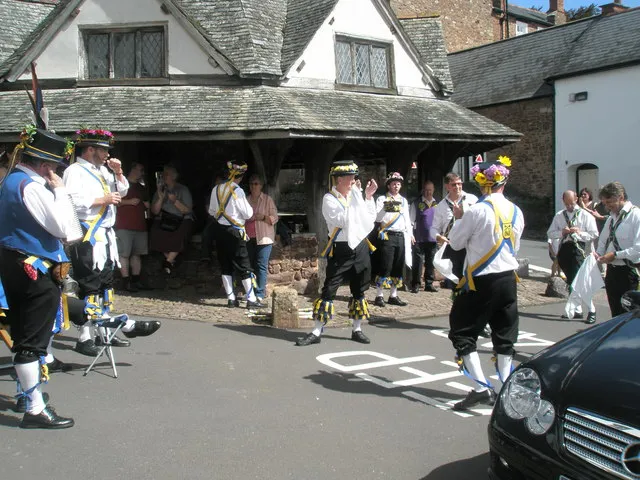
Photo: Basher Eyre, CC BY-SA 2.0, via Wikimedia Commons
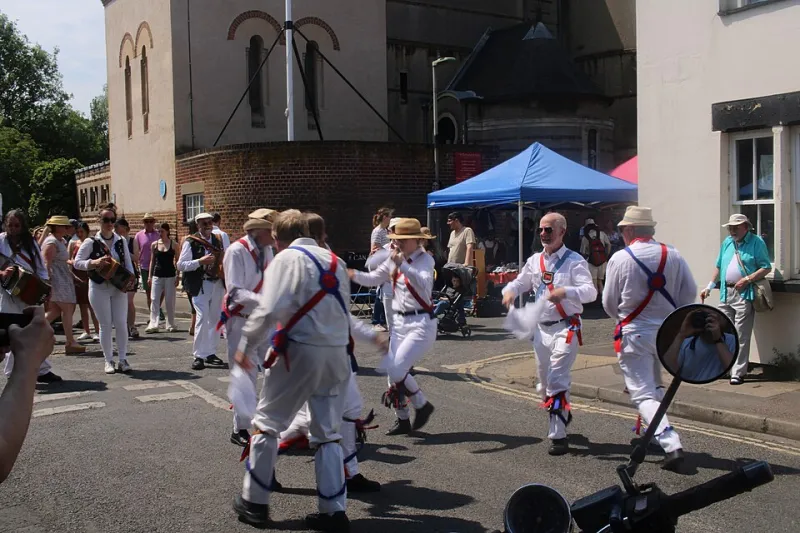
You’re wandering through St Albans on a Saturday morning, perhaps with a coffee in one hand and a shopping list in the other, when you hear it: bells, a fiddle, maybe a melodeon, and a shout that sounds suspiciously like someone having a very good time. A circle has formed. Sticks are cracking. Hankies are fluttering. And you’ve accidentally become an audience member.
Welcome. Morris dancing is one of the friendliest spectacles you can stumble across, but it does come with its own quiet set of conventions. None of them are complicated, and nobody is going to hand you a rulebook. Think of this as a gentle nudge in the right direction — the sort of thing a mate would tell you before your first dance, minus the rolled eyes.
Applaud the dance, not the dancer’s hat
Morris audiences are generous with applause, and that’s exactly as it should be. The best moment to clap is when a dance finishes and the side comes to a stop. A quick round of applause then tells the dancers the thing they secretly want to know: that you were watching, and that the twenty minutes they spent arguing about whether the third figure should go left or right was worth it.
What about clapping along during a dance? It depends. Some tunes invite it, especially when the musicians are clearly enjoying themselves, but a full-on rhythm section from the crowd can throw the dancers off their step. If in doubt, watch the people around you. If they’re tapping a foot rather than slapping a thigh, follow their lead. And if a dancer shouts “Hup!” or something similarly hearty, that’s part of the dance, not an invitation for a group response. Save your best shouts for the end.
One more thing: please don’t grab a dancer mid-move for a photo, a hug or a question about the bells. Morris involves sticks, collisions and precisely timed movements. A sudden hand on the shoulder is the quickest way to turn a neat figure into a pile of bells and apologies.
Cameras, children and curious dogs
Photographs are welcome, but a little courtesy goes a long way. Ask first if you can, especially if you want close-ups of individual dancers. Avoid flash — it’s distracting and makes everyone look like a startled heron. Stand where you aren’t blocking the circle for others, and if you’re filming a whole dance, be prepared for the fact that someone will walk through the shot carrying a pint. That’s not a flaw in the performance; it’s the local colour.
Children are brilliant audiences. They love the sticks, the bells and the sheer noise of it all, and the side is usually delighted to see them enjoying themselves. The key is keeping them just outside the dancing space rather than in the middle of it. A stick dance travels. A small child who wanders in to get a better look can quickly become part of the choreography, and not in a way anyone planned. Hold hands, stay back a pace, and let them clap as loudly as they like when the dance ends.
Dogs, meanwhile, are welcome in the way that all well-behaved dogs are welcome at outdoor events in Hertfordshire: on a short lead, away from the sticks, and not directly underneath a dancer’s feet. If your dog is the sort who feels compelled to join in with bells, perhaps watch from a few metres further back. The side loves dogs. The side does not love a lead wrapped around its ankles during a back-to-back turn.
Good questions, better timing
Morris dancers are generally a chatty lot, but timing is everything. Wait until the side has finished a dance and had a swig of water or a sip of something stronger before launching into questions. Then ask away. What’s the difference between Cotswold and Border? Why do some dancers have black faces? How long have you been doing this? Do you ever get dizzy? These are all fair game, and you’ll usually get a more enthusiastic answer than you bargained for.
If you’re thinking about having a go yourself, say so. St Albans Morris Men have been dancing since 1972, and like most sides they’re always happy to talk to people who fancy trying it. You don’t need experience, special kit or a background in folk dance. You need a pair of comfortable shoes and a willingness to look a bit silly for an evening. The rest can be learned.
The bit where a fiver helps
You’ll often see a collection bucket doing the rounds. This isn’t a ticket price, and nobody is checking. It helps cover the cost of kit, travel, musicians and the general business of keeping a community tradition moving. If you’ve enjoyed the dancing, a contribution is welcome. If you haven’t got cash, that’s fine too — applause is still currency. And if you’re wondering where the money goes, ask. Sides are usually transparent about it, and it’s a good conversation starter.
Standing room only, and that’s fine
Morris in St Albans happens in the middle of ordinary life: outside pubs, on Cathedral Green, near the market, on a station forecourt. There’s no velvet rope and no dress code. You can arrive halfway through a dance, leave when your parking runs out, or stay for three sets and discover you’ve accidentally missed lunch. That informal setting is the point. Morris isn’t a museum piece behind glass; it’s a living, slightly chaotic community tradition that happens to involve bells and sticks.
So clap when the dance ends. Ask before you photograph. Keep the children and dogs a safe distance from the sticks. And if you’re not sure what to do, just enjoy it. The side will be glad you stopped — and if you hang around long enough, someone will probably offer you a biscuit.